 크게 보시려면 그림을 클릭하세요.
[20120113. Complications of EMR/ESD (8): Informed consent (4)]
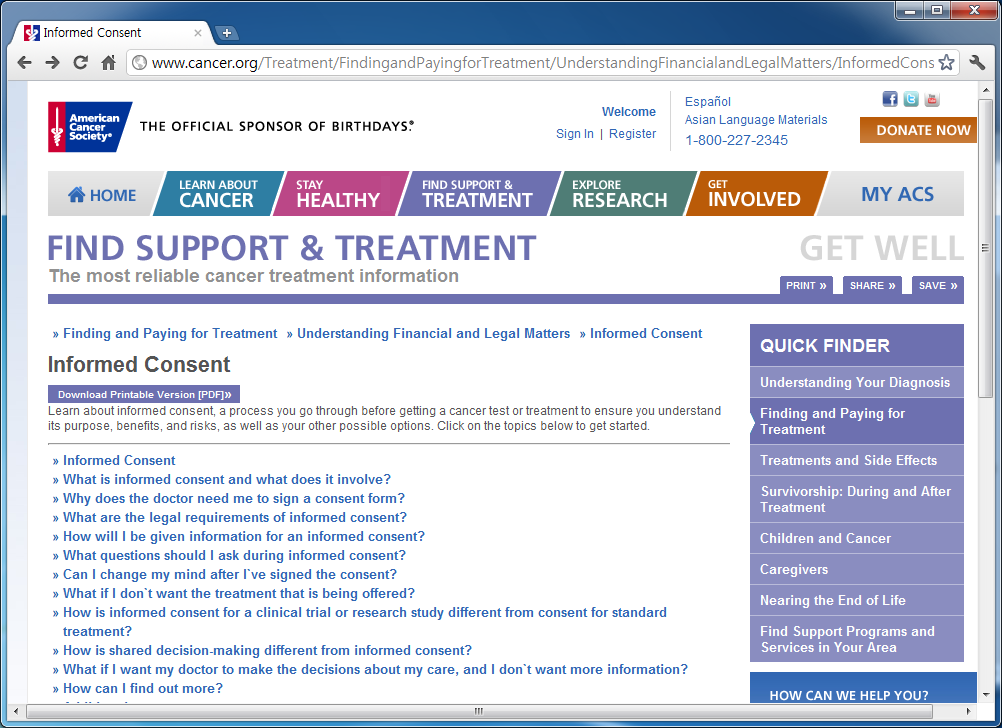
American Cancer Society에서 Informed consent에 대하여 설명하고 있는 부분을 살펴보기 바란다 (link, PDF). 물론 clinical trial을 염두에 두고 만들어진 설명서지만 일반 항암치료에도 적용가능하다.
크게 보시려면 그림을 클릭하세요.
방대한 자료도 놀랍지만 "What questions should I ask during informed consent?" 아래에 긴 설명을 붙여놓은 것은 무척 인상적이다 (link). 만약 우리나라 환자가 이렇게 많은 것을 물어온다면 우리는 거의 치료를 중단해야 할지 모른다. 여하튼 옮겨본다.
[What questions should I ask during informed consent?]
You will, of course, have your own questions, especially once the doctor starts sharing information. But some basic questions you might ask include:
- What is my diagnosis (the medical name for the illness I have) and what does that mean?
- How serious is my diagnosis?
- What treatments are recommended?
- Are there other treatment options? What are they?
- What benefits would you expect from the recommended treatments and other options?
- What are the risks or complications of the recommended treatment and the other treatment options?
- Are there problems or side effects that may be caused by the treatments?
- What methods will be used to prevent or relieve these problems or side effects?
- What are the side effects of the treatment -- immediate, short-term, and long-term?
- How will having treatment affect my normal functions and everyday activities?
- How would not having treatment affect my normal functions and everyday activities?
- How long will treatment last?
- How long will it be before I can go back to my normal activities?
- How much does the treatment cost?
- Will my insurance cover it?
It's a good idea to write down your questions and bring the list to your appointments, take notes on the responses, or bring a tape recorder to record the discussion. (You will want to check with the doctor before you record him or her.) Good health providers usually appreciate a patient's efforts to understand the challenges they face and to make informed decisions.
[Home]